About
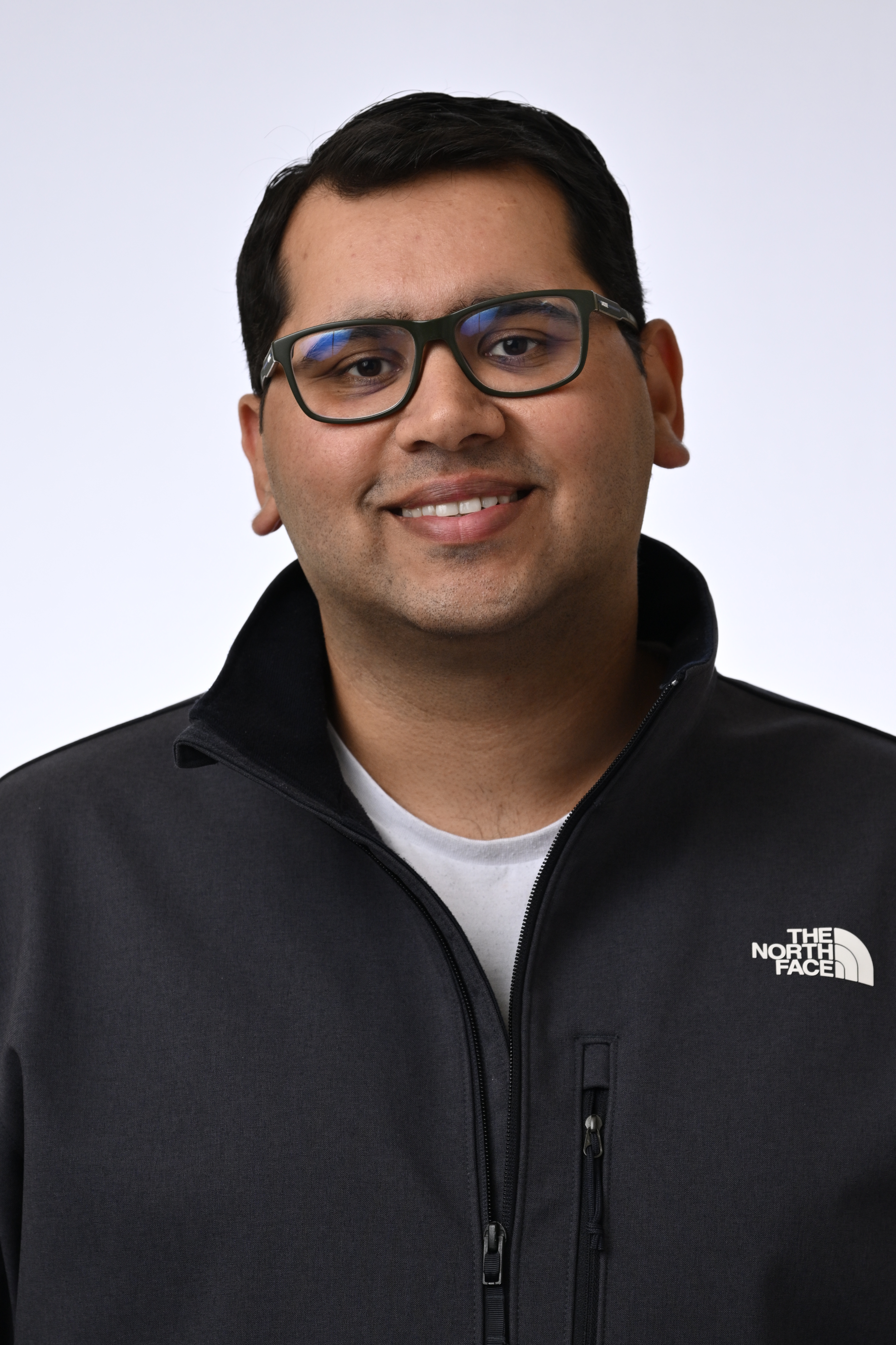
I am a Ph.D. candidate in International Political Economy at the School of Advanced International Studies (SAIS), Johns Hopkins University. My research has been supported by grants from Johns Hopkins SAIS, Gupta-Klinsky India Institute, Institute for Humane Studies, American Institute for Indian Studies, APSA Centennial Centre for Political Science and Public Affairs, and Sawtooth's Academic Grants Program.
My research examines the subnational political economy of state capacity in developing countries, focusing on how political and administrative institutions shape the recruitment and allocation of government personnel. I study how bureaucratic staffing patterns emerge, why they persist, and how they vary across political and administrative contexts. I combine administrative data drawn from government documents, newspapers, and court records with field experiments and surveys to study such recruitment policies and institutional bottlenecks.
Additionally, I am a research assistant for Professor Devesh Kapur having worked on A Sixth of Humanity: Independent India's Development Odyssey; and for Professor Yuen Yuen Ang working on The Polytunity Project at SNF Agora Institute.
My research has been cited and drawn upon by state government committees across India, the Reserve Bank of India, India's Central Pay Commission, and most recently the World Bank's World Development Report 2025. I was also a Teach for India Fellow, teaching children from low-income communities in Delhi and Mumbai.
Research
Working Papers
-
State-Building in Developing Countries: Challenges of Meritocratic RecruitmentThis paper examines the paradox of civil service recruitment in India: a vast labor supply and high demand for government jobs coexist with persistent vacancies and institutional bottlenecks. I argue that meritocratic recruitment processes themselves can entrench a patronage state, and document a systematic shift from permanent civil service positions toward contractual employment.
-
"A new broom sweeps clean, but an old broom knows the corners": Direct vs Promoted Bureaucrats and Public Service DeliveryHow does bureaucratic selection shape public service delivery? Comparing directly recruited and promoted mid-level bureaucrats in Odisha, India, we find no difference in delivery outcomes between the two groups, despite very different entry pathways. We argue this null is theoretically informative: it reflects the importance of interaction-made traits — capabilities produced through organizational environments and on-the-job socialization — over selection-made traits certified at entry. Meritocratic selection insulates appointments from patronage but cannot generate the organizational capacities that last-mile implementation requires. The findings speak to civil service reform debates across the developing world.
-
Law, Labor, and Language Models: Empirical Insights into Recruitment Litigation and State-Building in IndiaThis paper offers a large-scale, data-driven analysis of how recruitment-related litigation shapes state capacity in India's bureaucracy — an issue central to governance yet chronically understudied. Leveraging a novel dataset of High Court judgments and a robust annotation pipeline combining multiple large language models and expert audits, we empirically dissect the scale, causes, and outcomes of service law disputes across two decades in Uttar Pradesh, India. Our findings uncover that litigation, especially in the education sector, worsens bureaucratic vacancies, but is only one layer within deeper institutional dysfunction. We also present evidence on the shift of High Courts towards substantive justice and the effect of contemporary policy debates on litigation filings. Our approach forges new pathways in both empirical public administration and the use of LLMs on massive legal corpora.
Peer-Reviewed Publications
-
The Practice of Flexible Inflation Targeting in India — A Preliminary AssessmentIndian Public Policy Review, Vol. 2, No. 3 (2021)
-
Grants from Centre and States' Fiscal MarksmanshipIndian Public Policy Review, Vol. 2, No. 1 (2021)
-
Book Review: Phishing for PhoolsSt. Antony's International Review, Vol. 13, No. 2 (2018)
Book Chapters
-
India and the Rating AgenciesIn Bibek Debroy, Anirban Ganguly, and Kishore Desai (eds.), Making of New India: Transformation Under Modi. Wisdom Tree, 2018.
-
Liberalism in India: The Lucifer EffectIn Ronald Meinardus (ed.), What does it Mean to be a Liberal in India. Academic Foundation, 2016.
Policy Work
Policy Papers
-
Box 7.4: The Administrative Costs of Implementing a Recruitment Standard in IndiaWorld Development Report 2025: Standards for Development. World Bank, 2025.
-
Parallel Streams: Political Federalism and Economic Integration in IndiaState Capacity Initiative Working Paper No. 2023-7. Centre for Policy Research and Carnegie Endowment for International Peace, 2023.
-
Interoperability of Social Media Platforms: An Appraisal of the Regulatory and Technical EcosystemLandscape Study for IT for Change, 2022.
-
Financing Models of Digital EcosystemsData Governance Network Working Paper 22, 2021.
-
Facial Recognition Technologies and the Regulatory Frameworks in IndiaData Governance Network Working Paper 16, 2021.
-
Developing Infrastructure to Create Employment: Case Study — Water Provisioning in PunjabIDFC Institute, 2021.
-
Balancing Privacy for Technology Use: Lessons from COVID-19Background Paper for Digital Pathways, University of Oxford, 2020.
-
Privacy in Healthcare: The Role of National Digital Health BlueprintData Governance Network Working Paper, 2020.
-
PM Garib Kalyan Yojana: Coverage, Identification, and ImplementationWhite Paper for the World Bank, 2020.
-
Integrating Aadhaar and Voter ID: Promises and DangersData Governance Network Briefing Note, 2020.
-
Fiscal Modernisation: Lessons for India from the WorldIDFC Institute Working Paper, 2019.
-
Lessons from Aadhaar: Analog Aspects of Digital Governance Shouldn't Be OverlookedPathways for Prosperity Commission Background Paper Series, University of Oxford, 2019.
-
Infrastructure Priorities for Job Creation in IndiaResearch Report for Ford Foundation, 2019.
Policy Projects
Media
Podcasts
Talks & Panel Discussions
Other Writings
- "Meghalaya's Blueprint for Governance: How Reforms and Bureaucratic Capability Drive Real Results" (with Sampath Kumar) — Deccan Herald, 2026
- "Meghnad Desai: The View from Classroom" (with Ayush Patel) — Hindustan Times, August 2025
- "Shortfall" — FiftyTwo.in, February 2023
- "Who should finance digital ecosystems?" (with Rahul Matthan) — Hindustan Times, March 2022
- "New Volleyball League Heralds Change in Indian Sports Landscape" (with MB Ashwin) — The India Cable, March 2022
- "Digital Ecosystems: Who should Finance What?" (with Rahul Matthan) — Hindustan Times, February 2022
- "Aadhaar Link Threatens Sanctity of Electoral Rolls" (with Vibhav Mariwala) — The Wire, January 2022
- "Towards Fuller Capital Convertibility" (with Rahul Bajoria) — Financial Express, January 2022
- "The Economic Reforms of 1991: How India went from Crisis to Consensus" (with Shreyas Narla) — The 1991 Project, July 2021
- "Why Linking Aadhaar with Voter ID is a Dangerous Idea" (with Vibhav Mariwala) — The Indian Express, July 2021
- "Revise Judges Appointments to build Judicial Capacity" (with Shreyas Narla) — The Indian Express, April 2021
- "Financing Institutions is crucial for the Digital Economy" — Data Governance Network Blog, February 2021
- "Digitisation can help streamline government audits" (with Vibhav Mariwala) — Financial Express, January 2021
- "On Digital Governance, Don't Repeat Mistakes" (with Sharmadha Srinivasan) — Hindustan Times, October 2020
- "Community Data: More a River Than a Lake" (with Sharmadha Srinivasan) — Financial Express, August 2020
- "Urgent CSS reforms Needed" (with Sharmadha Srinivasan) — Financial Express, June 2020
- "Let the Economy Open. Don't Micromanage Lockdown Exit" — Times of India, May 2020
- "RWAs play a crucial Role in deploying Community Testing" (with Vaidehi Tandel) — FirstPost, May 2020
- "Relax FRBM Norms for States to Fight COVID-19" (with Sharmadha Srinivasan) — Financial Express, May 2020
- "Importance of Street Level Bureaucracy to Fight the Pandemic" (with Kadambari Shah) — Money Control, April 2020
- "An Income Support Plan for the Poor to Tide over Testing Times" (with Niranjan Rajadhyaksha) — Mint, March 2020
- "Budget 2020: Reform Income Tax to Build Fiscal Capacity" (with Sharmadha Srinivasan) — Money Control, January 2020
- "Ayushman Bharat can be a Success if Modi Government incentivises Data Use" (with Alexander Fager) — The Print, January 2020
- "Keep up with Tech and Regulate Whatsapp and Amazon" (with Harsh Vardhan Pachisia) — The Print, January 2020
- "Creating Jobs through Infrastructure Investments" (with Harshita Agrawal) — Business Standard, September 2019
- "India should take Advantage of the US-China Trade-war" (with Vivek Dehejia and Pravin Krishna) — Mint, September 2019
- "The Potential of Moving the National Capital" (with Sharmadha Srinivasan) — Money Control, May 2019
- "Indian Democracy Must Be More Representative" (with Reva Abrol) — Hindustan Times, April 2019
- "Unfulfilled Political Promises Weaken the Spirit of Democracy" — The Wire, April 2019
- "Narendra Modi led government made some radical reforms but lost out on dynamic change" (with Kadambari Shah) — Firstpost, February 2019
- "Finance Ministry has a Poor Forecasting Record" (with Sharmadha Srinivasan and Niranjan Rajadhyaksha) — Mint, January 2019
- "A New Vision for Election Manifestos" (with Kadambari Shah) — Mint, November 2018
- "War and Peace in Economics" (with Anirudh Tagat) — Pragati, August 2018
- "All Eyes on India's Biometric ID Experiment" — Pathways for Prosperity / University of Oxford, May 2018
- "The End of Accountability" — Pragati, February 2018
- "Who will Teach the Teachers" — Pragati, November 2017
- "Swachh Bharat Abhiyaan: successful yet unsuccessful" — News Laundry, December 2017
- "Jan Dhan Yojana: An Intriguing Work in Progress" — The Hindu (thRead), September 2017
- "Handle with Care" — Pragati, September 2017
- "Swachh Bharat Abhiyaan: An Ineffective Remedy" (winning entry in student competition) — Oxford Policy Blog, May 2017
- "Why don't we See Wrestlers from Tamil Nadu or Runners from Bihar and Haryana" — FirstPost, April 2017
- "Is India Growing?" (with Kadambari Shah) — Swarajya, March 2017
- "Looking East for Lessons on Labor" — The Hindu (thRead), September 2016
- "Budget 2016: A Fiscal Perspective" — Swarajya Magazine, March 2016
- "Understanding Capital Reforms in China and Some Lessons for India" — Swarajya Magazine, February 2016
- "How Fiscal Targets will shape the Union Budget 2016" — Scroll, February 2016
- "More Than Education" — Huffington Post, October 2015
- "Explaining Transaction Costs" — Logos — The National Interest, May 2015
Hindi: Selected articles in The Quint Hindi, The Quint, News Laundry, and Scroll.
Contact
School of Advanced International Studies
Johns Hopkins University
555 Pennsylvania Avenue NW, Washington, DC 20001
Email: prakhar.23mj@gmail.com
Twitter/X: @PrakharMisra